How to Design Your Dream Home: A Sensory Approach
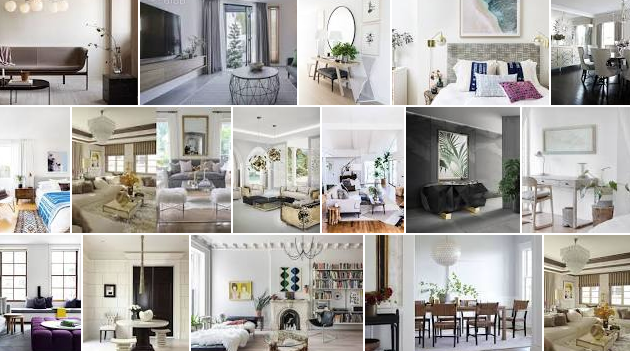
Go through sites such as Pinterest for inspiration…
The property market might feel frozen right now, but that pause gives us a rare gift: time to imagine how we truly want to live.
It’s a moment to dream, to envision the home that will nurture not just our bodies, but our senses.
Buying a home is likely the largest investment you’ll ever make, and everything you add or change in that space should be considered a further investment—not just financially, but emotionally and experientially. And it all begins with design.
Many clients focus on the “here and now,” rarely thinking about future-proofing their home. Planning ahead doesn’t mean tying your project in knots. It means setting foundational principles that make transitions and expansions seamless, sparing future headaches and stress.
Start with Function, Then Engage the Senses
Form must follow function. A beautiful room is pointless if it doesn’t meet your daily needs. Ask yourself: how do I want to live today, in five years, or beyond? What activities will happen in each space? Understanding this will help clarify both practical requirements and aspirational desires.
But don’t stop there—think about how the space feels. How does it smell, sound, and even how the light moves through it? Designing with the senses in mind transforms a house into a home that is lived in, loved, and remembered.
Visualise Your Space
If you’re considering major changes, try walking through your rooms in your mind, imagining walls removed or spaces reshaped for better flow. Otherwise, start with a simple plan. A sketch at 1:50 scale—where 2cm equals 1m—is a fantastic way to see proportions. Tech-savvy designers can use programs like Sketch-Up to create scaled 3D plans, complete with furniture and fittings, to test layouts before committing.
Collect Inspiration
Feeling overwhelmed by choices is normal. Begin by gathering images: tear out pages from magazines, scroll Pinterest, Houzz, or Olioboards, and mark what excites you—and what doesn’t. Over time, a clear style and sensory palette will emerge: textures you love to touch, colours that calm or energise, and spaces that feel open or cozy.
Keep It Simple
Avoid overcomplicating your design. Often, the simplest ideas in the right context create the most stunning results. A home that feels harmonious and intentional doesn’t need to shout—it needs to invite you in, awaken your senses, and make every corner a joy to inhabit.
And just like that, your concept begins to take shape—not just as a plan, but as a space to live, feel, and thrive.
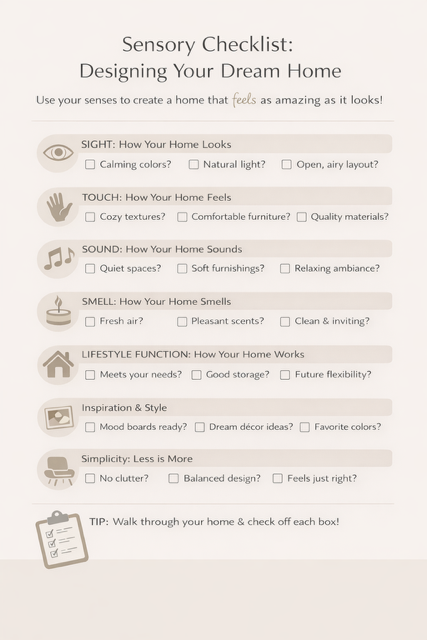
Sensory Checklist:
Use your senses to create a home that feels as amazing as it looks. Check off each box as you plan.
1. Sight – How Your Home Looks
Colours make you feel calm, energised, or cozy?
Natural light fills key living spaces?
Layout feels open and flowing?
2. Touch – How Your Home Feels
Textures you love to touch (rugs, fabrics, surfaces)?
Furniture is comfortable and inviting?
Materials feel high-quality and durable?
3. Sound – How Your Home Sounds
Quiet areas for work or relaxation?
Soft furnishings or rugs to reduce echoes?
Music or ambient sounds easy to enjoy?
4. Smell – How Your Home Smells
Ventilation keeps air fresh?
Favourite scents (candles, flowers, essential oils) incorporated?
Kitchen and bathrooms smell clean and inviting?
5. Lifestyle Function – How Your Home Works
Each room suits your daily activities?
Enough storage and practical space?
Future flexibility considered?
6. Inspiration & Style
Collected images of spaces you love?
Pinterest or Houzz boards ready?
Favourite furniture, décor, and colour palette identified?
7. Simplicity – Less is More
No overcrowding—each piece has a purpose?
Spaces feel harmonious and uncluttered?
Your home is designed to feel right, not just look pretty?
✅ Tip: Print this checklist, walk through your rooms, and imagine how each space engages your senses. Your dream home starts with awareness, not just aesthetics.