
How Artists See the Lake District: Designing Through the Senses
Artists have been responding to the landscape of the Lake District for centuries, translating what they felt as much as what they saw. Long before photography made images commonplace, early visitors were so overwhelmed by the drama of the mountains that they struggled to look directly at them. Some even used mirrors, gazing at the reflection over their shoulders. The softened image felt less threatening, a reminder that the senses often need mediation before the mind can make sense of beauty.
The paintings that followed were understandably theatrical. Hills were exaggerated into Alpine giants, peaks sharpened by awe and adrenaline. Later artists, notably the Heaton Coopers, confronted the landscape head-on and began to describe it more faithfully. William Heaton Cooper quite literally immersed himself in the terrain, sketching from precarious ledges on sheer rock faces to capture the true character of the fells for climbing guides. His work speaks not only to sight, but to balance, touch, and physical presence in the landscape.
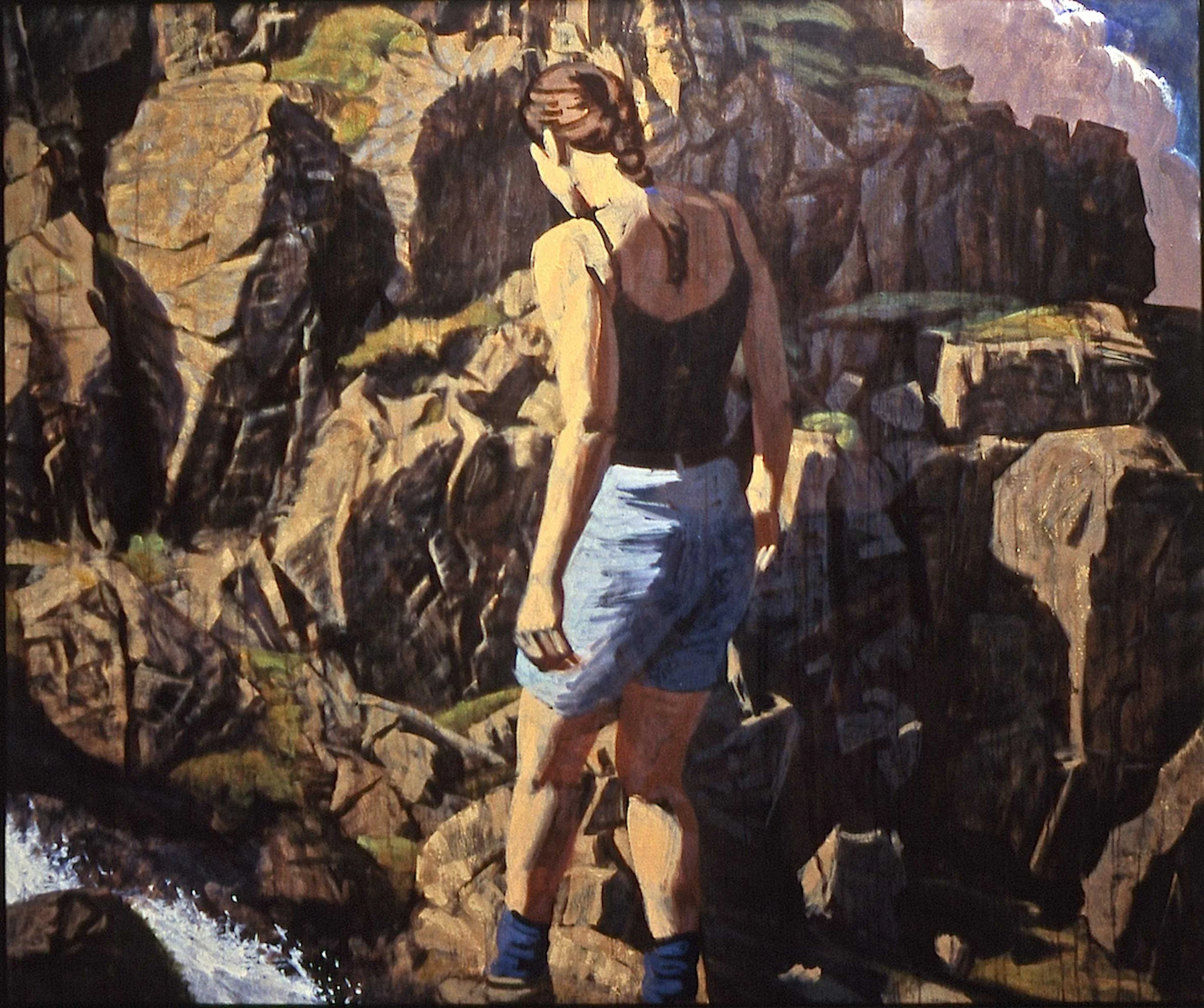
Great Gable by Julian Heaton Cooper, Britain’s leading living mountain painter
As printing improved, paintings and photographs of the Lakes travelled far beyond Cumbria on picture postcards. These small rectangles of card carried atmosphere as much as imagery. Many armchair mountaineers can still recognise Striding Edge without ever having set foot on it, their mental image shaped by something once held between finger and thumb. In an age of instant sharing, it raises an interesting question about how today’s visual culture will carry the same sensory weight.
Writers, too, have long translated the Lake District into feeling. Poets such as William Wordsworth found language for the emotional resonance of the landscape, while Alfred Wainwright used drawings and maps to convey its unique atmosphere. His guidebooks do more than show routes. They invite you to imagine the view, the wind, the vastness of space from each summit.
Having been raised in the Lake District and introduced early to walking on the fells, that sensory connection has always stayed with me. Even while studying and working in London, and later travelling further afield, I carried the outlines of the hills in my mind. I often pictured them as Wainwright drew them, silhouettes layered on the horizon, a visual memory tied closely to feeling grounded and at home.
Those outlines have found their way into my own designs, particularly in the Love District cushion range. They are simple shapes, but loaded with memory. Texture, form, and line work together to evoke place. This is where art, landscape, and sensory design meet. Others are doing the same. Windermere-based painter Marilyn Tordoff is a wonderful example. Her work hangs in hotels and homes across the region, often bought by visitors wanting to take a sense of the Lakes back with them.
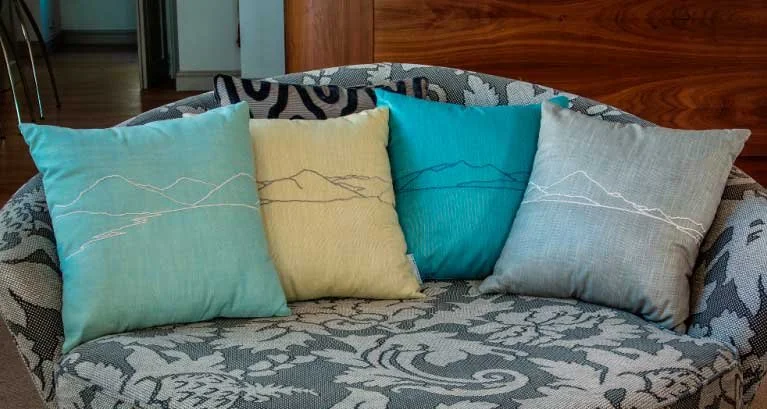
Where art meets nature meets design….
How art is displayed matters just as much as the artwork itself. A single painting can be as powerful as a full gallery wall if it is given space to breathe. Proportion, scale, and placement all affect how we experience it. A generous mount focuses attention and gives the eye room to settle, while wall colour can echo tones in the artwork, turning the entire wall into part of the composition.
Frames play their own quiet role in sensory design. A slim aluminium frame can all but disappear, letting the image speak alone. An over-wide or carved frame introduces weight, texture, and presence. With thoughtful use of colour, even traditional frames can feel fresh and contemporary. It’s not about rules. It’s about how the whole arrangement feels in the room.
Designing with the senses means understanding that we don’t just look at art. We absorb it. The Lake District has always inspired artists to do exactly that, and when we bring those interpretations into our interiors, we invite a little of that atmosphere to live with us every day.